Cambridgeshire Bat Carers
In Cambridgeshire we have a small group of volunteer Bat Carers. They are trained, vaccinated against rabies, and registered with the Bat Conservation Trust (BCT) to ensure the bats get the best care possible, and that all activities are within the law.
Found a Bat?
If you find a bat during the day then it will likely need help ASAP. If it is on the ground, on a wall, or in one of your rooms, contain it within a box and call either one of the numbers listed on the Welcome page or the National Helpline on 0345 1300 228. Avoid handling bats where possible, but if you need to then wear gloves as there is a (very) small risk of contracting rabies.
You will need:
- A shoe box, with holes punched in the lid (or container of equivalent size).
- A clean cloth or tea towel.
- A plastic bottle cap (milk bottle tops are perfect).
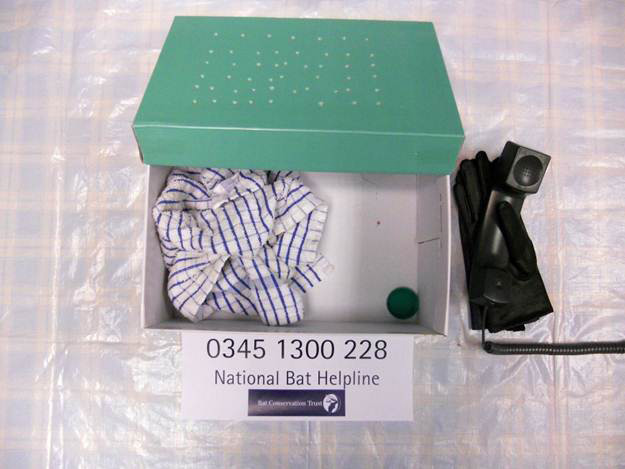
- Contain the bat either like you would a spider, by placing a box on top of it and sliding a piece of card underneath, or alternatively, cover the bat with a cloth/tea towel and carefully scoop it up and place it in the box. (You should not handle the bat with bare hands.)
- Put a tea towel or soft cloth in the box for the bat to hide in.
- Put in a small, shallow container (e.g. a plastic milk bottle top) with a few drops of water (not enough for the bat to drown in). Make sure the water is topped up regularly.
- Keep the bat indoors somewhere quiet, dark, and away from any pets.
- Most importantly, call the Bat Helpline on 0345 1300 228 for further advice.
Only a bat that has been confirmed as fit and healthy by a bat rehabilitator should be released, and never during the day. You can find more information on what to do if you find a grounded bat on the BCT website.
What We Do – “The Three R’s”
RESCUE – following a phone call to the bat helpline about a grounded bat, BCT will contact one of the carers to arrange collection or delivery of the bat.
REHAB – after assessment of the bat by the carer, our aim is to provide the necessary care and treatment so that the bat can eventually be released back into the wild. This sometimes involves the assistance of a vet. Unfortunately, on some occasions we will need to euthanize the bat to prevent unnecessary suffering. This is often the case when a bat has been attacked by a cat or when it has been a long time before it was brought in to care.
RELEASE – we aim to release rehabilitated bats at, or near to, the place where the bat was found, so that it is familiar with its environment.

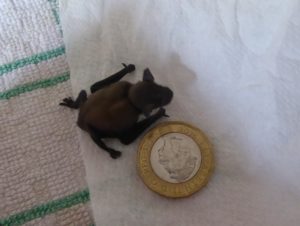
Like most of our local wildlife, our bats are under pressure from environmental changes, including loss of habitat and suitable roosting sites. In addition, many of our casualties are the result of cat attacks. To minimise the threat of cats please follow guidance on the BCT’s website: Cat Attacks.
Every bat we can rescue, rehabilitate and release back into the wild is precious and your help and support is much appreciated.